
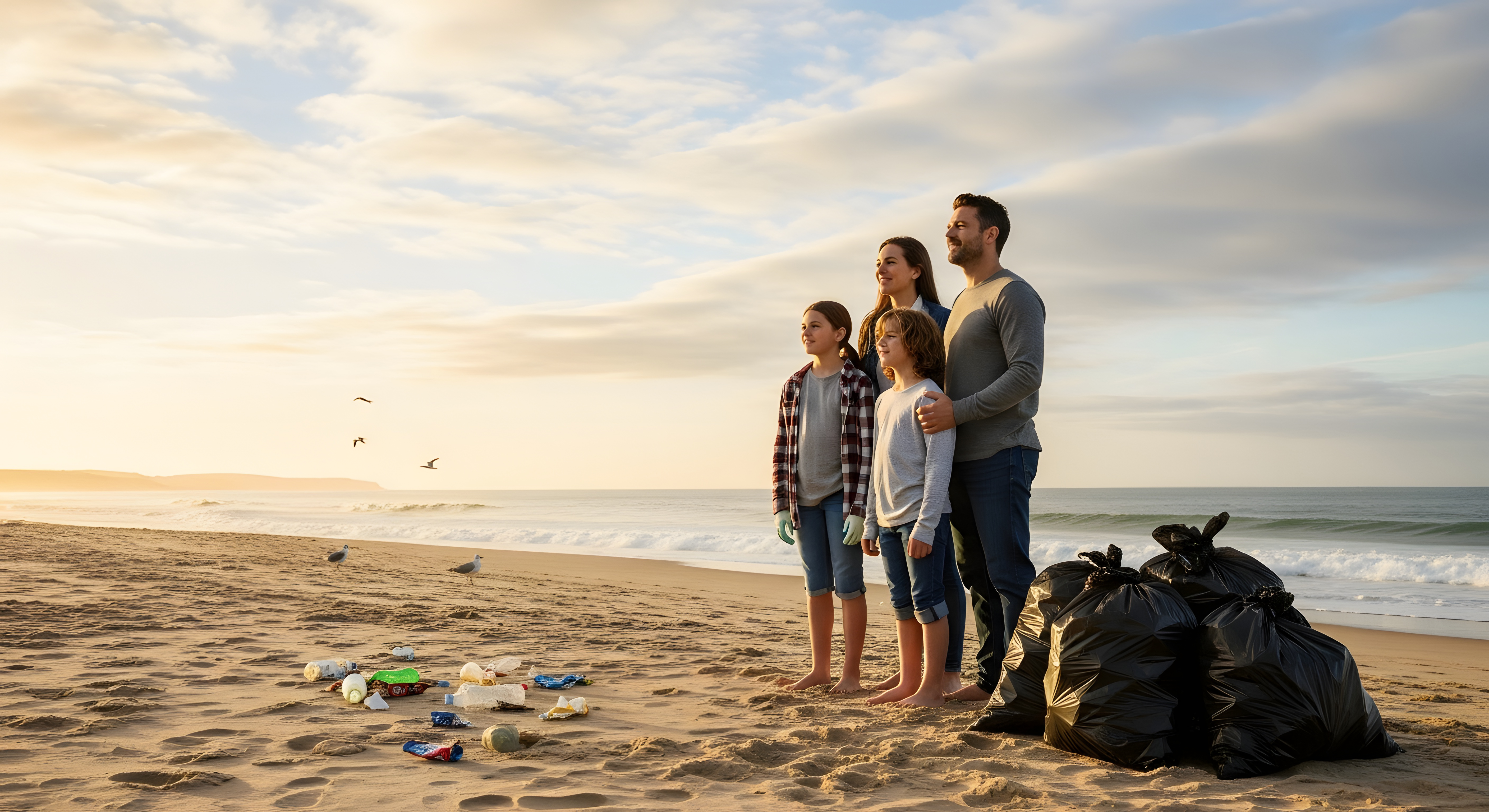
Younger buyers don’t “opt into” sustainability — they expect it.
EcoFocus Research finds that sustainability has become a normalized part of early socialization for Gen Z and Millennials, influencing not just beliefs but everyday decision-making. These generational differences are reshaping how consumers evaluate products, packaging, and brand values.
Environmental motivations are mainstream — especially for younger buyers
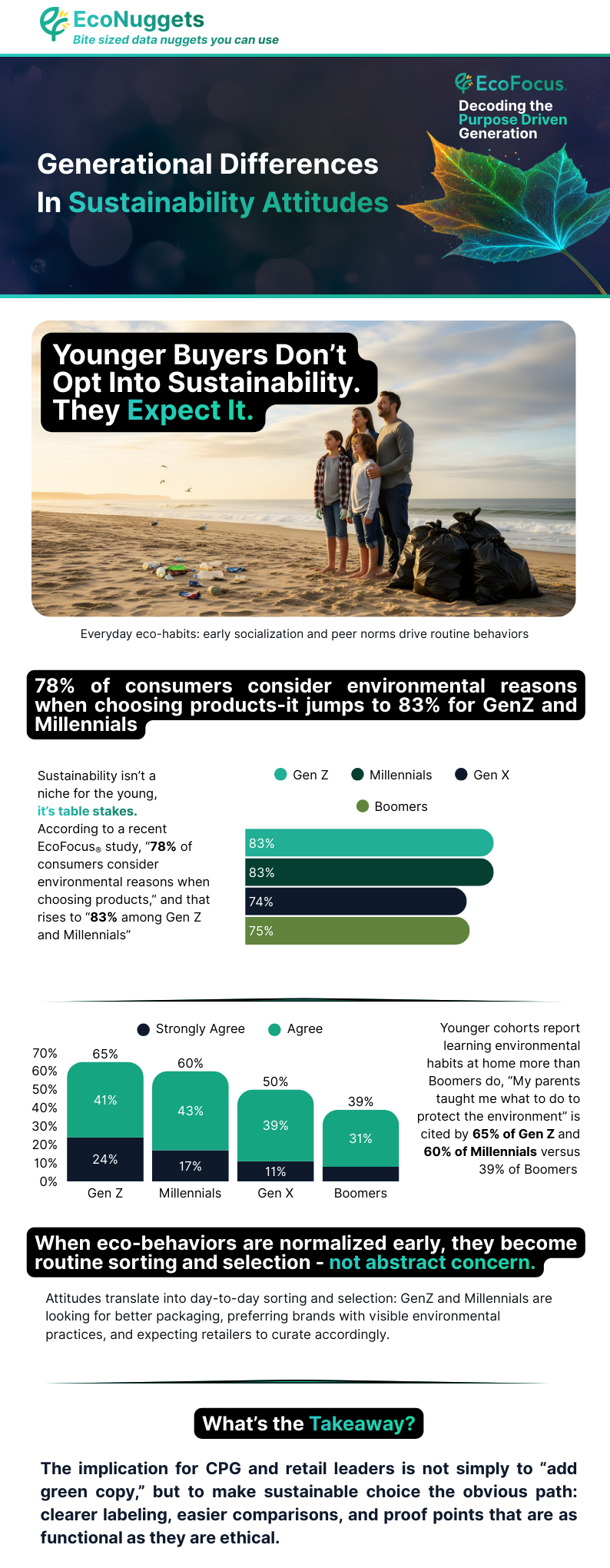
According to EcoFocus Research, 78% of consumers consider environmental reasons when choosing products. This increases to 83% among Gen Z and Millennials, signaling that sustainability is no longer a niche preference — it’s become table stakes for emerging generations.
Younger buyers are more aware of brand values, visible sustainability practices, and environmental impact. Their expectations shape not just what they purchase, but where they shop and which brands they trust.
Early eco-socialization drives stronger sustainable habits
Gen Z and Millennials report learning environmental habits more consistently at home compared to older generations. For example:
- 65% of Gen Z say their parents taught them how to protect the environment
- 60% of Millennials report the same
- Only 39% of Boomers say they received similar guidance
These early behaviors form the foundation of routine sorting, recycling, and sustainable product selection later in life.
“When eco-behaviors are normalized early, they become routine sorting and selection — not abstract concern.”
Key takeaways
- For brands, sustainability can’t be treated as an optional message or superficial add-on. Younger consumers expect:
- • clearer environmental claims
- • transparent labeling
- • visible sustainability practices
- • packaging that aligns with their values
- • proof points that are as functional as they are ethical
- CPG and retail leaders who meet these expectations strengthen trust — and those who ignore them risk irrelevance as generational power shifts.